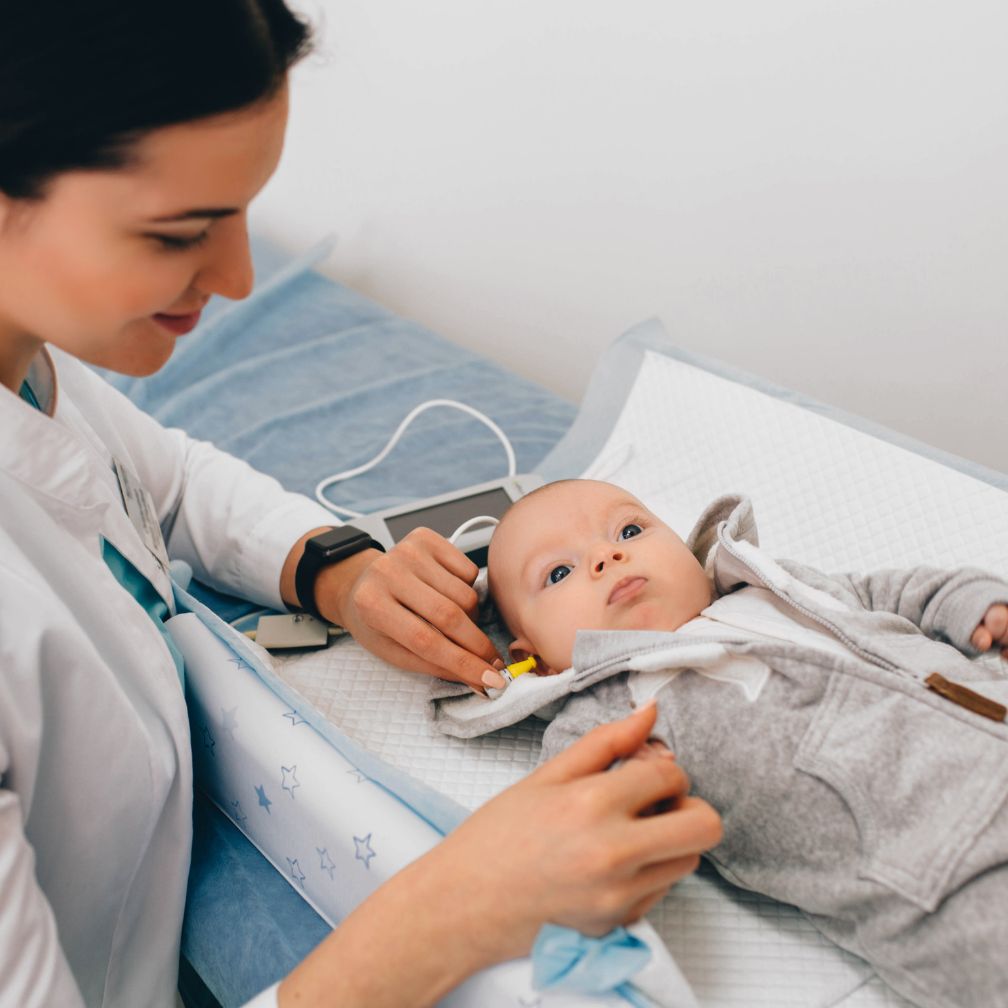
For new parents, finding that their newborn presents auditory issues can feel deeply shocking and distressing. Yet the encouraging reality remains that owing to swift diagnosis and early care, infants experiencing hearing loss are positioned to prosper. In fact, such infants can acquire spoken language, expressive skills, and deep relationships across their surroundings, paving the way toward a vibrant, rewarding life!
Two of the most effective tools for helping infants with hearing loss include custom hearing aids and cochlear implants. Inside this overview, we outline their functional attributes to help you choose the most effective pathway for your infant.
Understanding Infant Hearing Loss
Early hearing loss in young infants can develop due to various root causes, such as:
- Random genetic variations (even across lineages devoid of hearing loss history)
- In-utero viral infections including cytomegalovirus (CMV) and rubella cases
- Labor complications, featuring perinatal hypoxia or premature delivery
- Specific intensive care medications utilized inside dedicated neonatal care facilities
The single most critical action? Swift diagnostic evaluation. This necessity explains why babies in United States hospitals complete hearing tests before departing the nursery. Dedicated pediatric hearing clinicians strongly promote the official “1-3-6” intervention timeline:
- Primary screening administered within 30 days of birth
- Official diagnostic verdict finalized prior to 3 months post-birth
- Direct clinical management (utilizing hearing tools or specialized rehabilitation) established prior to 6 months
Meeting these clinical targets provides infants an unparalleled opportunity for normal speech, expressive language, and cognitive progression. If you want guidance on these diagnostic stages, your pediatrician will gladly offer support!
Understanding Amplification Devices for Infants
When managing infants presenting with mild to severe hearing deficits, personal hearing aids regularly act as the frontline therapeutic choice. These tiny, wearable hearing tools amplify acoustic signals, aiding babies in discerning human speech and ambient sounds more accurately.
Current pediatric hearing aids function as:
- Officially approved and safe for babies just several weeks of age
- Designed with soft, non-irritating ear inserts that get updated throughout early childhood development
- Engineered with child-proof battery covers plus specialized safety features geared toward babies
- Expertly programmed by a pediatric audiologist to align with your child’s hearing needs
As your baby grows, these hearing instruments require routine adjustments to maintain physical comfort and functional efficacy.
Pediatric Cochlear Implants: An Advanced Solution
Should an infant present with profound to severe sensorineural hearing impairment and fails to show adequate progress with standard hearing aids, a cochlear implant may be advised. Unlike hearing aids, cochlear technology:
- Require surgical implantation within the auditory bone structure to connect with the auditory nerve
- Completely bypass dysfunctional structures across the inner ear system
- Convert surrounding audio into precise electrical signals that directly activate the auditory nerve
State-of-the-art cochlear systems function as:
- Granted official FDA clearance for young patients as young as 9 to 12 months
- Uniquely successful when supported by early speech therapy and family support
- Cleared strictly after detailed multi-disciplinary testing by a pediatric audiologist and ENT surgeon
That multi-step journey involves neuroimaging scans, specialized auditory testing, and realistic discussions regarding long-term developmental milestones.
Hearing Aids or Cochlear Implants: Distinguishing Features
- Mild to severe hearing loss: Hearing Aids; Severe to profound hearing loss: Cochlear Implants
- Non-Invasive: Hearing Aids; Invasive surgical placement: Cochlear Implants
- Physical sound amplification: Hearing Aids; Digital electrical impulse transformation: Cochlear Implants
- Fitting starts at early infancy: Hearing Aids; Implantation starts at 9-12 months: Cochlear Implants
Closing Perspective: Choosing Between Hearing Aids and Implants
If your newborn faces a confirmed hearing impairment diagnosis, you have options and dedicated care teams are available. Under the care of specialized pediatric hearing doctors, countless infants successfully cultivate communication skills that mirror those of their age group.
Whether your child is a candidate for hearing aids or cochlear implants, early intervention can make a lifelong difference.
Have questions about your baby’s hearing health? Contact our staff today for a complete diagnostic review and tailor-made care roadmap.