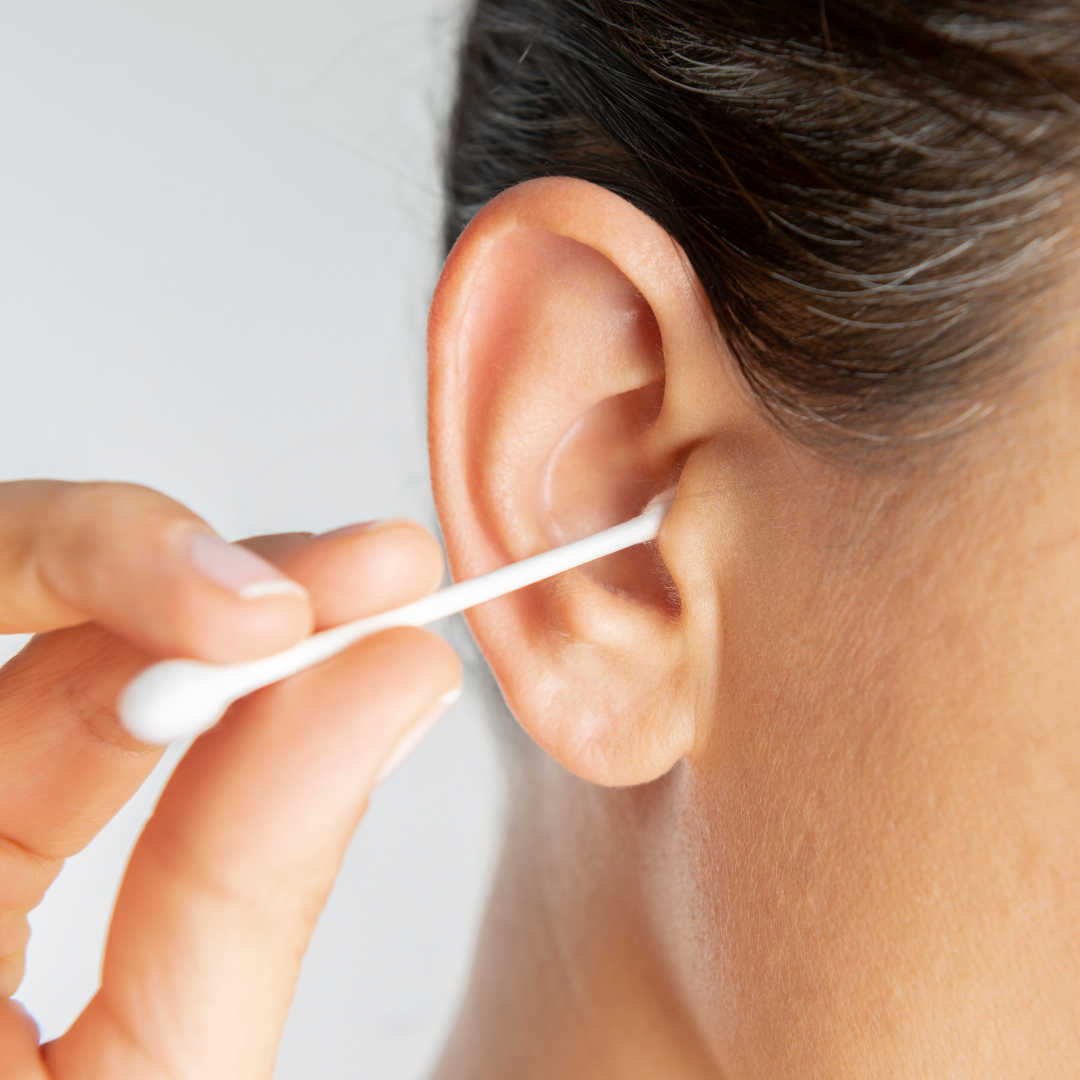
While cotton buds look like simple cleaning instruments, inserting them directly into your ear canal complicates hygiene and can injure sensitive structures. We perform thorough examinations to verify if earwax removal is necessary and select appropriate procedures for your ear condition. Ears don’t always need manual cleaning; however, if wax builds up, we can help patients safely remove excess wax.
Understanding the Risks of Using Q-Tips in the Ear
Clinically speaking, earwax, or cerumen, should never be regarded as dirt or debris. It traps dust and debris, helps limit bacterial growth, lubricates the ear canal, and protects its sensitive skin. Natural temporomandibular jaw motion combined with epithelial migration steadily pushes aging cerumen outward, where it naturally sheds or rinses away in the shower.
Inserting a cotton swab directly into the auditory canal interferes with this natural clearance mechanism. Even if the swab gathers a trace of surface cerumen, it routinely compacts the remaining mass against the eardrum. Continuous swab usage packs loose secretions into a hardened mass, generating an occluded sensation that tempts patients into additional probing.
Swabs can be safely applied along the outer ear cartilage, but they should never be inserted past the canal aperture.
How Can Ears Get Damaged from Q-Tip Use?
Canal skin is thin, vascular, and highly vulnerable to mechanical abrasions. Tiny skin lacerations provoke pain and bleeding while forming entry pathways for pathogens, multiplying the chance of external ear infections. The cotton end can also dislodge from the applicator, creating a retained foreign body within the ear.
Clinically documented swab injuries include:
- Cerumen forced into dense canal impaction
- Scratches, irritation, swelling, or bleeding
- Acute otitis externa or canal infection
- A cotton tip or other material trapped in the ear
- Structural tears or perforations across the eardrum
- Injury to the tiny hearing bones behind the eardrum
- Transient or irreversible shifts in hearing thresholds
- Distressing tinnitus, secondary dizziness, or debilitating ear pain
Serious injuries are uncommon, but they can happen if someone bumps the user’s arm, the swab slips, or it is inserted too far.
Establishing Safe Intervals for Earwax Extraction
Most individuals do not need to perform earwax maintenance on a calendar schedule. Healthy ear physiology steadily propels wax toward the surface, where daily hygiene cleans the external ear. Excessive cleaning strips natural oils, inflames delicate canal skin, and substantially elevates the chance of infection or impaction.
Removal becomes appropriate when wax blocks the canal, prevents us from examining the eardrum, interferes with a hearing aid, or causes discomfort.
Safe Home Strategies for Managing Earwax
If earwax produces no discomfort or auditory decline, leaving it undisturbed is consistently the safest choice. Wipe only the outer ear with a soft, damp cloth, and let the canal clean itself.
If cerumen requires softening, we might suggest an over-the-counter preparation or ear drops formulated with carbamide peroxide, mineral oil, saline, or glycerin. Dispense only the directed amount and restrict use strictly to the timeframe specified on the product packaging. Immediately halt applications if the medication triggers pain, profound dizziness, skin irritation, or deteriorating symptoms.
At-home ear flushing is not suitable for all ears and demands prior clinical verification and step-by-step guidance from a provider. Never attempt to flush your ear canal with a pressurized dental water irrigator. Avoid hazardous gadgets including ear candles, sharp metal loops, camera-assisted tools, hair clips, and home vacuum extractors. These hazardous instruments often cause cutaneous burns, sharp cuts, eardrum ruptures, or compounded cerumen impaction.
Recognizing When Earwax Requires Clinical Intervention
Schedule a professional visit if the canal remains occluded after softening treatments, cerumen appears deeply lodged, or home remedies fail. Clinical extraction is strongly recommended for patients unable to remain motionless, those with stenotic canals, hearing aid users, or individuals with surgical histories that contraindicate drops or flushing.
You should seek professional assessment for:
- Acute otalgia, unrelenting canal pruritus, or physical tenderness
- Active bleeding, pus formation, clear exudate, or malodorous drainage
- Pyrexia or localized tissue swelling surrounding the ear canal
- The rapid emergence of tinnitus or episodic dizziness
- Sudden hearing drops or auditory deficits that remain after wax removal
- Suspected tympanic membrane tears or retained cotton foreign bodies
- Recurrent impaction that affects hearing devices
Any rapid-onset hearing loss in one ear must be evaluated as an emergency rather than dismissed as a wax plug. Prompt testing can distinguish a blockage from a time-sensitive inner-ear problem.
Professional Techniques for Cerumen Removal
We always inspect the canal directly using an illuminated otoscope or surgical microscope to confirm cerumen buildup and evaluate for inflammation, injury, or eardrum ruptures. The most appropriate removal approach is determined by wax texture, canal structure, patient background, surgical history, and individual tolerance.
Professional options include:
- Application of enzymatic softening drops before or during extraction
- Regulated mechanical irrigation with body-temperature saline for sealed eardrums
- Controlled vacuum micro-suction under continuous visual monitoring
- Direct physical removal using precision instruments such as loops, curettes, or tiny forceps
Continuous visual monitoring enables the practitioner to navigate around sensitive epithelial tissue and pause immediately if discomfort arises. Combining multiple extraction techniques is sometimes required for stubborn, dehydrated, or densely consolidated cerumen. Following the procedure, the ear is re-evaluated to guarantee that both the canal passage and eardrum are clear and healthy. If fullness, tinnitus, dizziness, or hearing difficulty continues, additional testing can identify another cause.
Request an Appointment for Clinical Earwax Removal
When your ears feel plugged or you notice auditory changes, schedule an appointment with our specialists instead of grabbing a cotton swab. Your clinical visit will cover a comprehensive review of symptoms, otologic surgical history, hearing aid utilization, home care efforts, and metabolic contributors to wax buildup. Connect with our practice today to reserve an appointment for safe, professional earwax removal.