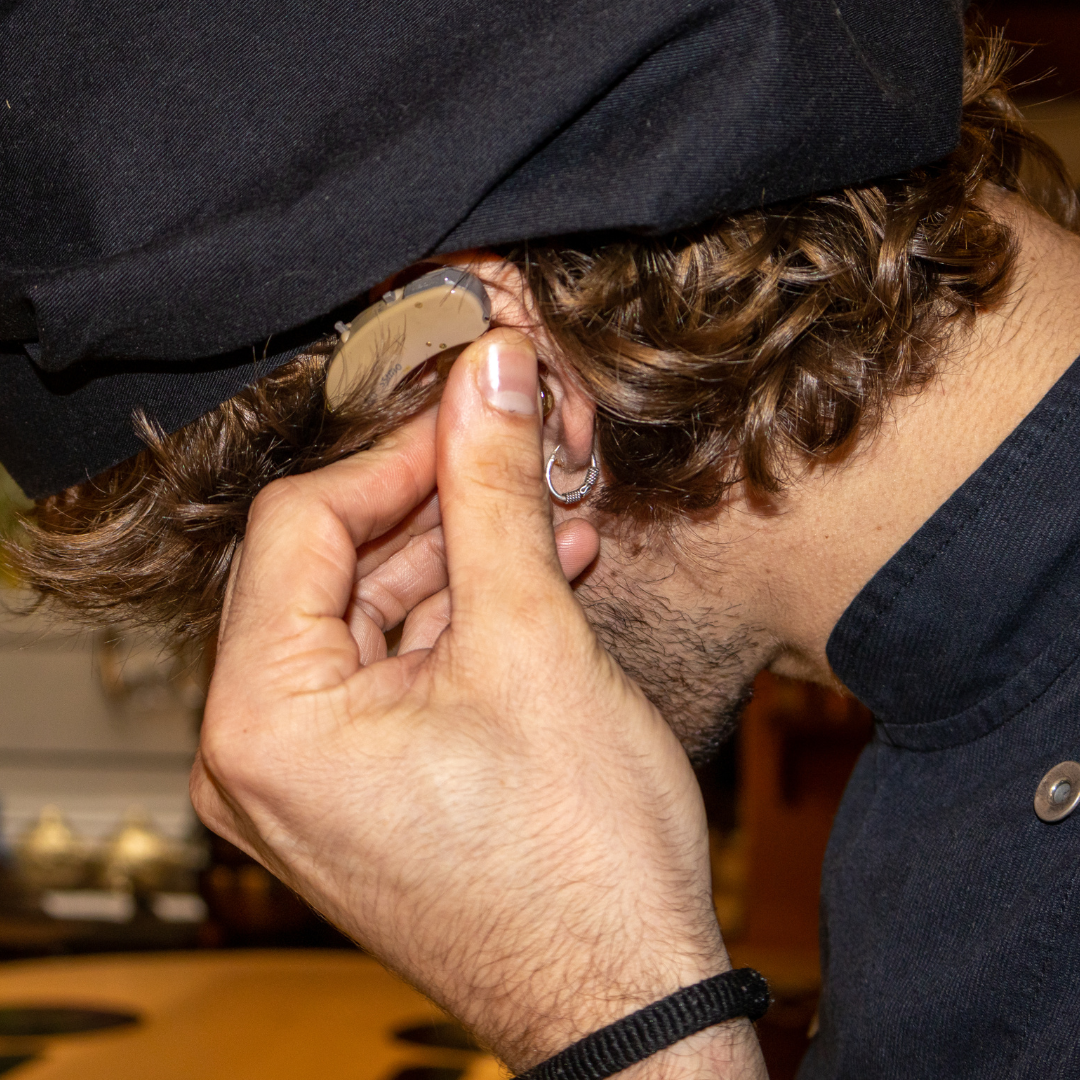
Following dinner conversations becomes challenging when high ambient noise interferes with your focus and hearing. Our audiology clinic conducts specialized testing to evaluate hearing in both quiet sound booths and noisy simulations to isolate the underlying cause. As soon as we identify the physiological cause of your difficult hearing, we deliver personalized rehabilitation options.
Explaining Normal Quiet Hearing Versus Restaurant Listening Fatigue
A quiet setting creates an optimal signal-to-noise ratio, ensuring the conversational partner’s voice rises cleanly above ambient sounds. Dining venues establish an entirely contrary auditory challenge. Layered diner voices, kitchen activity, foreground music, and room reverberation muddy speech signals, requiring intense mental strain to follow dialogue.
These auditory struggles commonly accompany untreated high-frequency hearing loss, central processing delays, or presbycusis. Cognitive exhaustion, physical fatigue, low ambient lighting, and increased distance from your conversational partner further compound the challenge. Many individuals register normal audiometric thresholds on standard pure-tone screenings yet show profound deficits during speech-in-noise testing. Inability to track speech in crowded restaurants merits audiological evaluation even when standard daily hearing sounds completely normal.
Diagnosing High-Frequency Hearing Loss and Clarity Issues
The diagnostic workup opens with an extensive intake examining difficult listening environments, past noise trauma, tinnitus presence, family history, and medical history.
Clinical pure-tone audiometry identifies hearing threshold levels across various frequencies by delivering sounds through air and bone pathways. High-frequency hearing loss commonly presents on the audiogram as a characteristic precipitous drop in the higher frequency ranges. Diagnostic evaluations may also integrate acoustic tympanometry to check middle-ear pressure alongside word-recognition testing to evaluate speech processing.
Standard quiet test booths fail to simulate real-world restaurant noise, making speech-in-noise testing a crucial clinical tool. This procedure gauges speech-discrimination accuracy while competing multi-source noise becomes incrementally louder. Combined, these clinical findings determine whether your symptoms stem from acoustic audibility, word clarity, central noise filtering, or multifactorial causes.
The Role of Central Auditory Processing Disorders in Adults
A diagnosed auditory processing disorder affects how the brain’s auditory cortex analyzes, organizes, and interprets sound. While peripheral ears may register soft tones normally, the auditory cortex struggles to filter competing noise, resolve phonetic contrasts, or keep pace with rapid conversation. We systematically verify peripheral hearing health before establishing whether an advanced auditory-processing evaluation or medical referral serves your needs.
Behavioral Strategies for Hearing Clearly in Loud Venues
Minor environmental adjustments can boost speech acoustic signals and supply critical visual lip-reading cues. Before dining out, choose a quieter restaurant or visit during an off-peak time. Settings constructed with comfortable booths, acoustic ceiling panels, drapery, and carpeted walkways facilitate easier communication than open venues with concrete and glass.
When arriving at the dining venue:
- Ask for seating positioned far away from open kitchens, noisy bar areas, ceiling speakers, and large parties.
- Sit with your back near a wall to reduce noise coming from behind you.
- Face your conversation partners in good lighting.
- Keep conversational proximity as close as comfortably feasible to preserve acoustic signal strength.
- Angle your stronger-hearing ear toward the primary individual you wish to converse with.
- Prompt companions to rephrase unclear sentences with alternate terminology instead of repeating identical words.
- Confirm important details rather than pretending to understand.
- Take a brief listening break when fatigue begins to build.
- Ask dinner guests to speak with clear enunciation at a steady, natural conversational rate.
- Raised or shouting voices warp acoustic phonetics and rarely improve speech intelligibility.
Assistive Listening Technologies for Noisy Environments
Optimal technological solutions depend entirely on the etiology of your symptoms, target acoustic spaces, and whether measurable hearing loss exists. Professionally fitted hearing aids may use directional microphones, digital noise reduction, and dedicated restaurant programs to emphasize speech from the front and reduce some competing sound. They still require realistic expectations because no device can remove every unwanted voice.
Pairing your devices with a remote wireless microphone generates a substantial improvement in the direct signal-to-noise ratio. Worn on the speaker’s collar or set on the table, the microphone broadcasts direct audio to paired hearing aids or specialized receivers. By streaming directly, this technology overcomes acoustic falloff from distance and surrounding environmental noise.
Additional effective assistive technologies include:
- Wireless conference table microphones that capture multi-speaker discussions
- Built-in telecoils linking directly with induction hearing-loop systems in public venues
- Mobile speech-to-text applications delivering instant visual captions during dinner
- Advanced hearables incorporating assistive directional listening programs
- Sound-meter apps and acoustic dining directories for locating quiet venues
We analyze suitable devices, verify functional compatibility with your current setup, and guide you through real-world operation.
Clinical Audiology Care for Hearing in Complex Noise
A professional clinical assessment moves beyond basic baseline statements like “I hear fine in quiet rooms.” We examine the challenging acoustic venues, conversational setups, and noise profiles you encounter to select appropriate diagnostic tests. The diagnostic battery may encompass pure-tone thresholds, acoustic middle-ear evaluations, suprathreshold word recognition, and speech-in-noise measures. Specialized auditory-processing testing can be ordered when patient history and preliminary audiometric findings warrant deeper neural investigation.
Hearing changes that present abruptly, affect only one side, or progress rapidly necessitate consultation with an ear, nose, and throat physician. Individualized diagnostic care pinpoints the precise physiological etiology rather than merely blaming restaurant noise for communication struggles.
Schedule a Diagnostic Hearing Evaluation Right Away
If restaurant conversations leave you guessing, withdrawing, or feeling exhausted, schedule a comprehensive hearing evaluation with us. We can evaluate targeted solutions to optimize your hearing in noisy environments using prescription hearing aids, assistive listening technology, or communication strategies tailored to you.
Contact us to request an appointment and take the next step toward easier conversations.